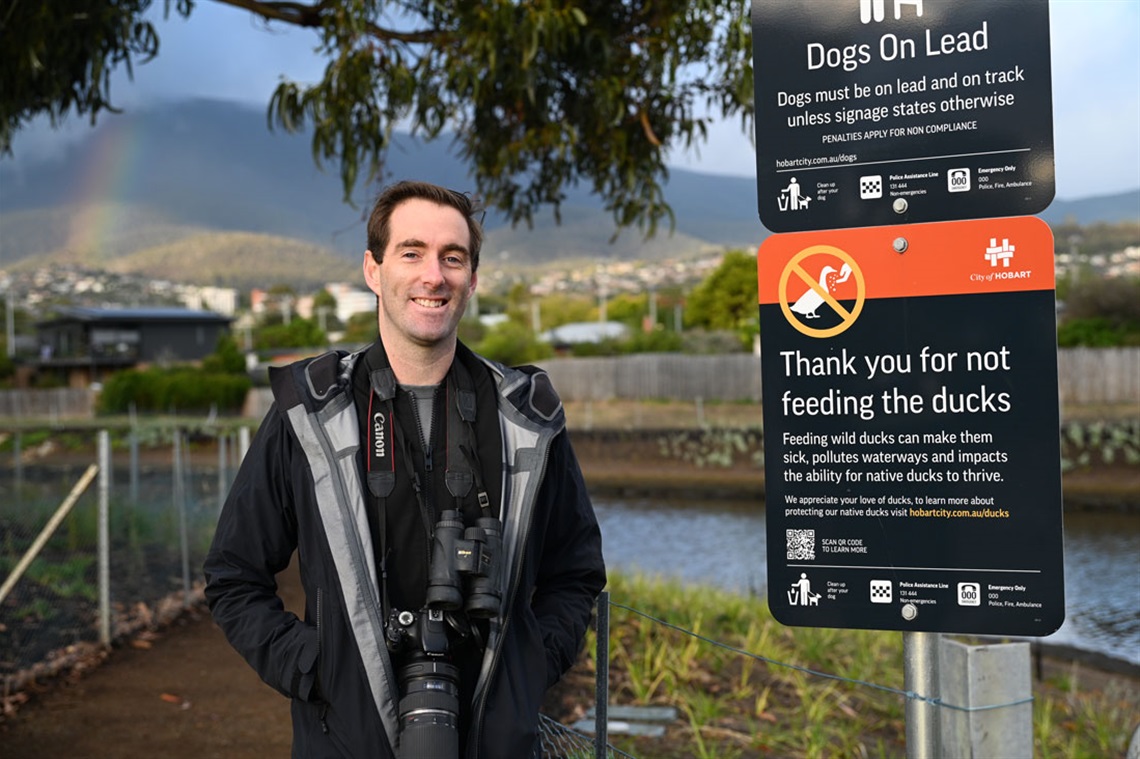
Native waterbirds are returning to the New Town Rivulet in droves just months after a $2 million environmental restoration project rewilded the waterway.
Jason Graham from the Pacific Black Duck Conservation Group says flocks of grey teal, chestnut teal, Pacific black ducks and Australian wood ducks are now regulars on the rivulet.
"A flock of pied oystercatchers has been spending a lot of time around the river mouth," says Jason.
"Hoary-headed grebes and cormorants are a more common sight in the rivulet, and it was very nice to see a young family of Piyura Tasmanian native hen foraging along the waterway on my first visit."
The environmental restoration project was carried out by the City of Hobart and Glenorchy City Council. Work started in February 2025 and has created a natural estuarine environment with new walking tracks and parking to encourage community access and enjoyment.
Nearly 30 000 native trees, shrubs, grasses and water plants have been planted to stabilise the banks and help encourage birds and aquatic wildlife back to the area.
Your chance to win a Ducks of Tasmania booklet
Want to learn more about our native ducks and how you can protect them?
We have 40 copies of the beautifully produced Ducks of Tasmania booklet to give away.
It's a fantastic field guide and filled with lovely illustrations of our native ducks.
Enter competition
 White faced heron on the New Town Rivulet. Photo: Jason Graham
Just the beginning
"The most exciting thing about this project is that this is just the beginning," says Jason.
"I’m excited to see how the rivulet looks in several years when the native trees and shrubs have grown and more native species can then forage and find nesting sites along the rivulet.
"Ground cover will increase for smaller animals like bandicoots, skinks, fairywrens and native pollinators, such as native bees, honeyeaters and butterflies.
"It’s my hope this area will become a safe breeding site for Pacific black ducks and that they can use this location to avoid domestic mallard cross breeding, which is putting our little black ducks at risk of localised extinctions."
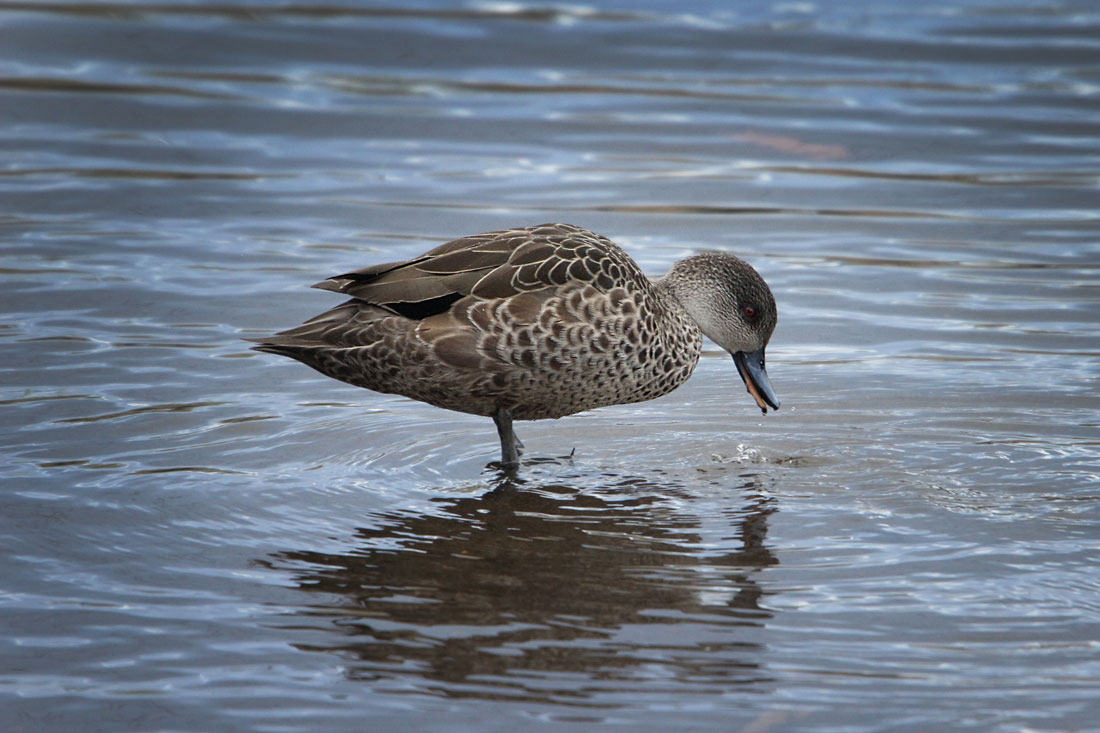 A grey teal feeding on the New Town Rivulet. Photo: Jason Graham
Twitcher hotspot in the making
Jason believes it won't be long until the New Town Rivulet becomes a popular port of call for local bird watchers.
"I have taken an international visitor on a walk here who was very impressed by the bird life on display as well as the efforts to rehabilitate the area," he says.
"Before this, I would never have taken a visitor to the New Town Rivulet to show off Hobart’s wildlife."
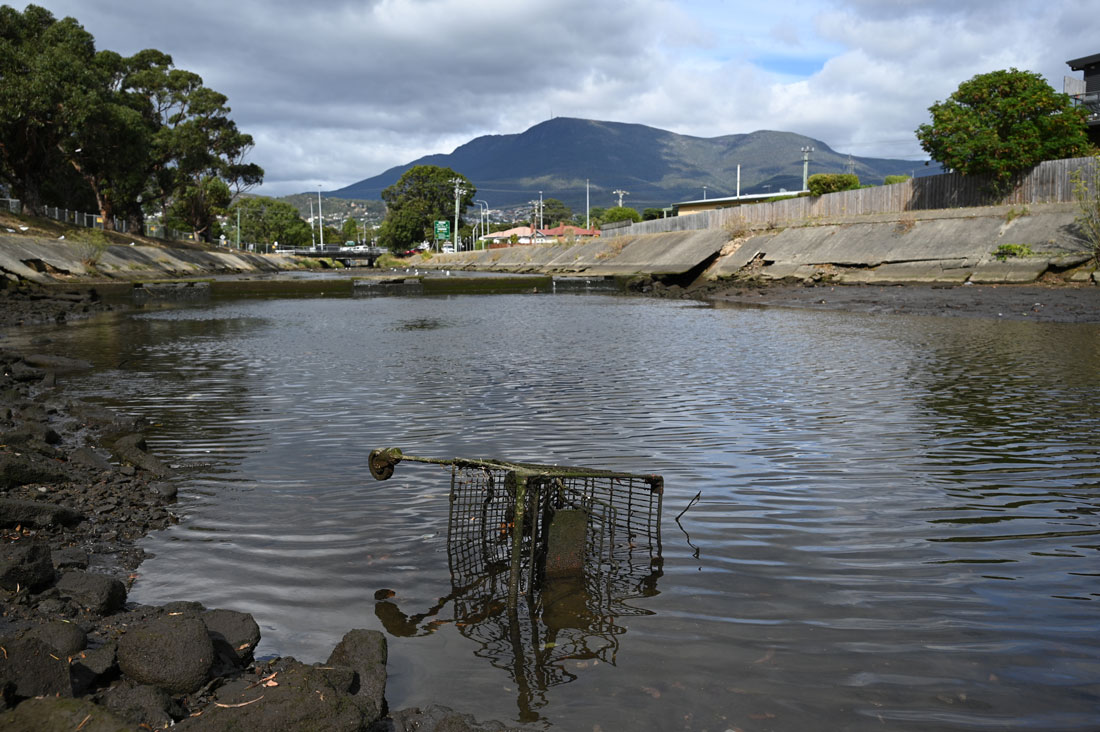 A discarded shopping trolley in the New Town Rivulet before the rewilding project.
Concrete pit to wildlife haven
Just two years ago the site was covered in cracked concrete embankments that prevented easy access to the water for bandicoots and native bird species.
The dominant waterbirds were not native. At times up to 100 geese and domestic mallards bullied native species, crowding them out in the hunt for food and space.
Jason is the brains trust behind Tasmania's Pacific Black Conservation Group and works with volunteers to help protect our native ducks from the threat of feral ducks.
His group played a key role in removing a huge number of feral geese and mallards from the New Town Rivulet to allow the restoration project to advance.
"If we hadn't removed those feral animals from the site all of the beautiful native plantings would have been for nothing," he says.
"The feral geese and mallards would have trampled the newly planted shrubs and tree saplings, and they would have continued to dominate the space.
"Glenorchy City Council removed 54 geese from the site, and our Pacific Black Duck Conservation Group volunteers rehomed the remaining geese and removed most of the mallards.
"Now we need to keep the feral ducks and mallards away from the rivulet to allow for the return of even more native waterbirds, including our Pacific black ducks."
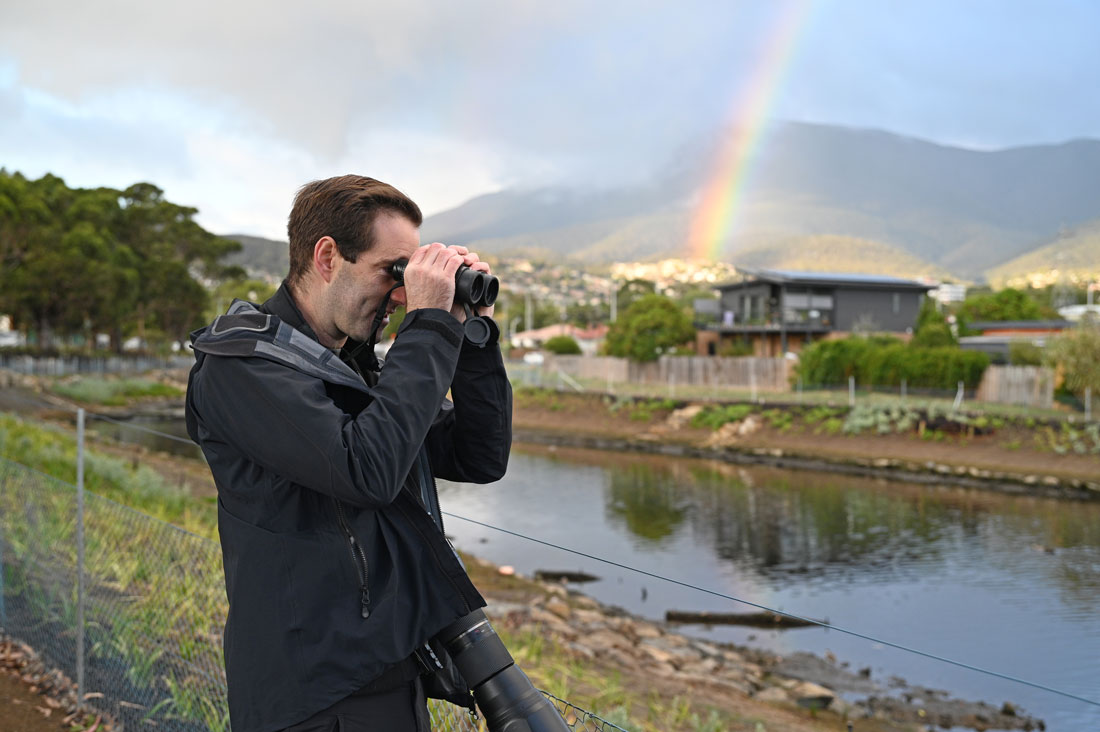 Jason Graham monitors the New Town Rivulet for the arrival of new waterbird species.
 Help protect our native ducks
Feeding any kind of food to ducks is harmful, says Jason. No human food can beat the natural diet of invertebrates and plants that ducks feed on while dabbling or diving, and swapping bread for greens still supports populations of dumped domestic ducks.
Putting out a tub of water may seem like a harmless way to help ducks, but the only species who benefit from this are mallards, who prefer to stay in their local area and essentially take it over.
Jason says the best way to look after our native Tasmanian ducks is to enjoy them by identifying them, learning about them, and by simply watching them going about their business.
"I guarantee that enjoying ducks without hurting their chances of survival by feeding them is much more fun!"
The Pacific Black Duck Conservation Group is a volunteer Landcare group dedicated to the conservation of the Pacific black duck in Tasmania and raising awareness about our native duck species. Follow them on Facebook and Instagram.
Win a Ducks of Tasmania booklet
Want to learn more about our native ducks and how you can protect them?
We have 40 copies of the beautifully produced Ducks of Tasmania booklet to give away.
It's a fantastic field guide and filled with lovely illustrations of our native ducks.
Enter competition
To learn more about native ducks in Hobart visit hobartcity.com.au/ducksofhobart